
What happened
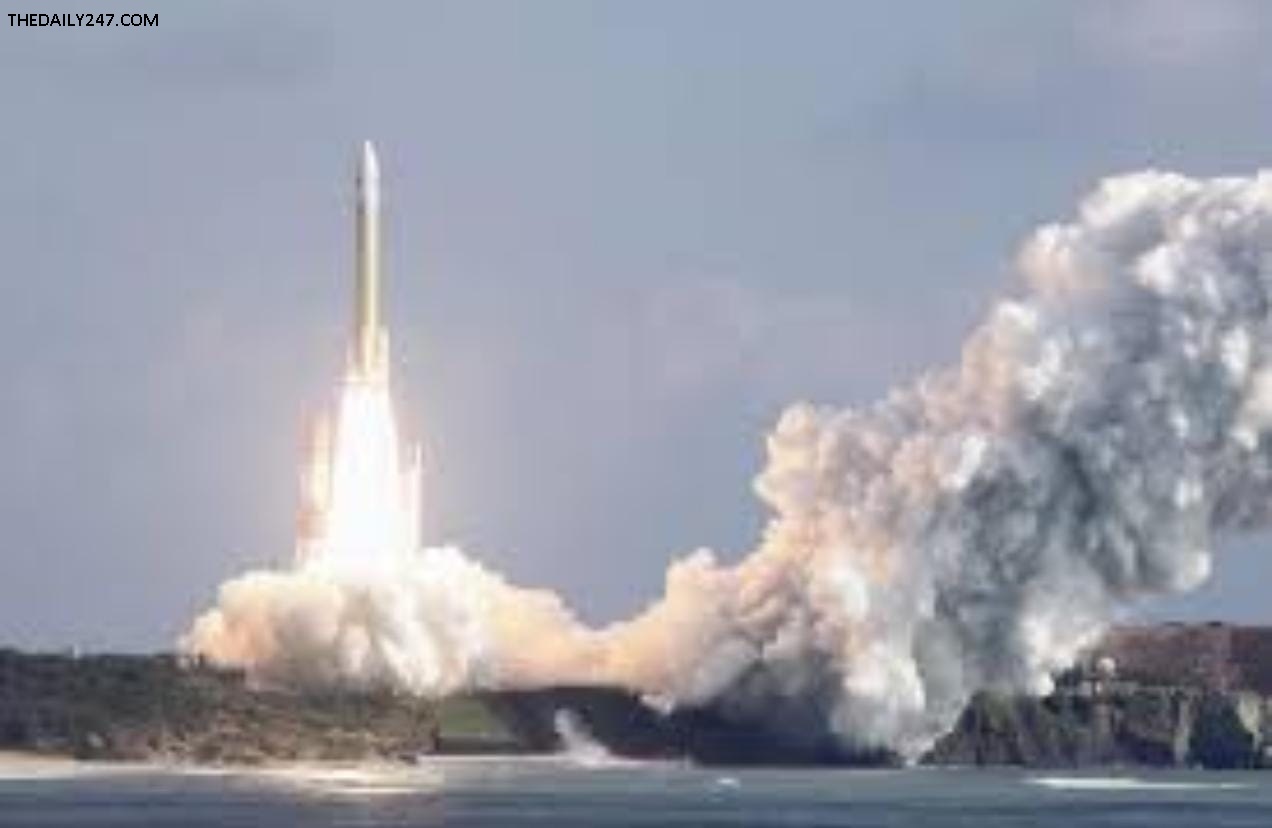
On October 26, 2025, the Japan Aerospace Exploration Agency (JAXA) successfully launched its new flagship rocket, the H3 rocket (Flight No. 7), from the Tanegashima Space Center in southern Japan. The rocket carried the newly developed unmanned cargo spacecraft HTV‑X1 on its maiden resupply mission to the International Space Station (ISS).
The spacecraft separated from the rocket as planned and entered its designated orbit about 14 minutes after liftoff. It is scheduled to berth with the ISS in a few days, where Japanese astronaut Kimiya Yui aboard the station will use the robotic arm to capture the HTV-X1 for docking.
Why it matters
- Next-generation resupply capability: The HTV-X series is the successor to JAXA’s earlier HTV (H-II Transfer Vehicle, known as “Kounotori”) which flew nine missions between 2009–2020.
- Greater capacity & flexibility: HTV-X is designed to carry a larger payload and provide onboard power during flight — enabling higher-value cargo such as laboratory samples requiring low-temperature storage.
- Strategic & commercial ambition: The H3 rocket replaces Japan’s long-serving H-2A launcher; the success signals Japan’s aim to be more competitive globally in launch services and strengthen its national space transport infrastructure.
Key specifications & mission details
Launch vehicle: H3 rocket (flight 7) from Tanegashima.
Spacecraft: HTV-X1, first flight of the HTV-X series.
Docking profile: HTV-X1 is designed to remain berthed to the ISS for up to six months, after which it will undock and conduct up to a three-month orbital mission before re-entry.
Payload capacity: While precise numbers vary, HTV-X is described as having about 1.5 times the capacity of its predecessor.
Broader context & future implications
With the success of this mission, Japan joins the growing roster of nations with advanced ISS resupply capabilities.
The HTV-X architecture is designed not just for low Earth orbit (LEO) missions, but could contribute to future lunar-oriented logistics, in alignment with collaborative exploration efforts like the Lunar Gateway.
Launch success also strengthens Japan’s role in commercial launch markets and enhances national security dimensions of space transport.
Challenges & watch-points
Although H3 has now achieved multiple successful flights, its maiden flight in 2023 failed and required payload destruction. The successful HTV-X1 launch helps restore confidence.
HTV-X1 is still on its first mission, so its full operational capacity and long-term reliability remain to be validated.
The broader space-logistics ecosystem is competitive: ISS resupply involves multiple players (e.g., Russia’s Progress, U.S. vehicles) and HTV-X must prove cost-effectiveness and reliability to succeed commercially.
In summary
Japan’s successful launch of the HTV-X1 cargo spacecraft aboard the H3 rocket marks a significant milestone — not only for ISS logistics, but for Japan’s ambitions in space transport, exploration, and commercial launch services. The coming days will see the spacecraft docking with the ISS and completing its mission, and subsequent performance will shape how Japan participates in the next era of LEO and lunar logistics.