
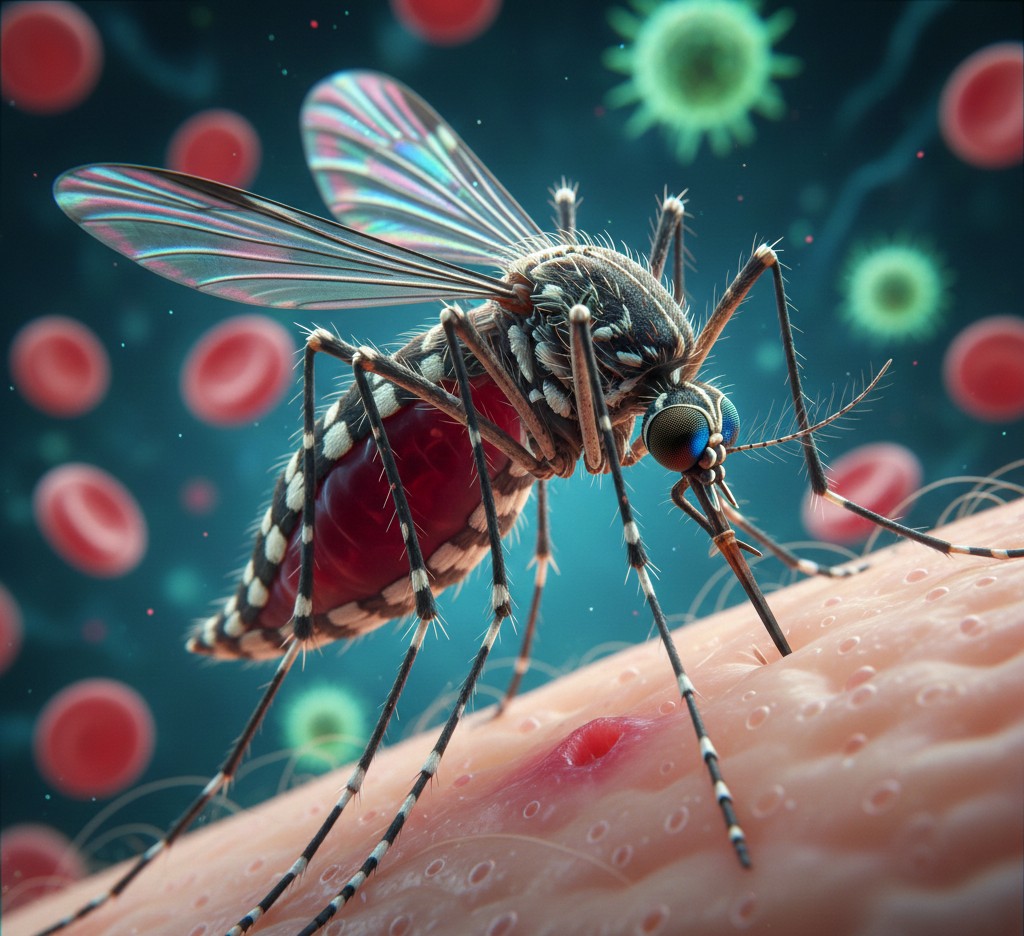
NEW DELHI – In what is being hailed as one of the most significant public health achievements of the 21st century, India has reached a historic milestone in its battle against malaria. At the IMA NATCON 2025 conference held this week, national health authorities confirmed a staggering 97% reduction in malaria cases and deaths compared to the previous decade, signaling that the country is now within touching distance of total eradication.
For a nation that once bore the highest malaria burden outside of sub-Saharan Africa, the transition from “high-endemic” to “pre-elimination” status marks a triumph of digitized healthcare, community mobilization, and aggressive clinical intervention.
A Data-Driven Victory
The cornerstone of this success has been the integration of the Ayushman Bharat Digital Health Mission with real-time surveillance. Unlike previous decades, where outbreaks in remote tribal belts often went unreported for weeks, India now utilizes a centralized digital dashboard.
Health workers—including over a million Accredited Social Health Activists (ASHAs)—are equipped with handheld devices to record cases instantly. This “track and treat” strategy allows officials to identify emerging hotspots within 24 hours, deploying “focal sprays” and insecticide-treated nets (ITNs) to contain the spread before it becomes an epidemic.
The Role of Domestic Innovation
India’s journey toward zero malaria has also been fueled by local innovation. The indigenous production of highly effective Rapid Diagnostic Kits (RDKs) and the mass distribution of long-lasting insecticidal nets have drastically lowered the cost of prevention.
Furthermore, the introduction of the world’s first malaria vaccines (RTS,S and R21/Matrix-M) in high-transmission zones has provided an extra layer of protection for the most vulnerable demographic: children under five. By combining these vaccines with traditional vector control, the “transmission chain” that had persisted for centuries has finally been broken in several states.
State-Led Success Stories
The success is not uniform but reflects a massive coordinated effort across diverse geographies:
- Odisha, formerly the state with the highest burden, has seen a near-total collapse in parasite prevalence thanks to its “DAMAN” (Durgama Anchalare Malaria Nirakaran) initiative, which took healthcare directly to inaccessible forest regions.
- The North-East Corridor, once a hotbed for drug-resistant malaria, has reported zero deaths for two consecutive years.
The Final Mile: Challenges Ahead
Despite the celebration, health experts at the conference warned against “eradication fatigue.” The final 3% of cases are often the hardest to eliminate, usually residing in cross-border migratory populations and deep forest areas.
“We are in the ‘last mile’ of a marathon,” said a senior official from the National Center for Vector Borne Diseases Control (NCVBDC). “The focus must now shift from mass control to microscopic surveillance. Every single case must be treated as a national emergency to prevent a resurgence.”
A Global Signal
India’s success serves as a blueprint for other tropical nations. As the country prepares to apply for the World Health Organization’s “Malaria-Free” certification—which requires three consecutive years of zero indigenous cases—the world is watching. If India can defeat malaria, a disease once thought to be an inescapable part of its geography, the dream of a malaria-free world becomes a tangible reality.
As we head into 2026, the message from India’s health corridors is clear: The buzz of the mosquito is fading, replaced by the quiet confidence of a nation reclaiming its health.