
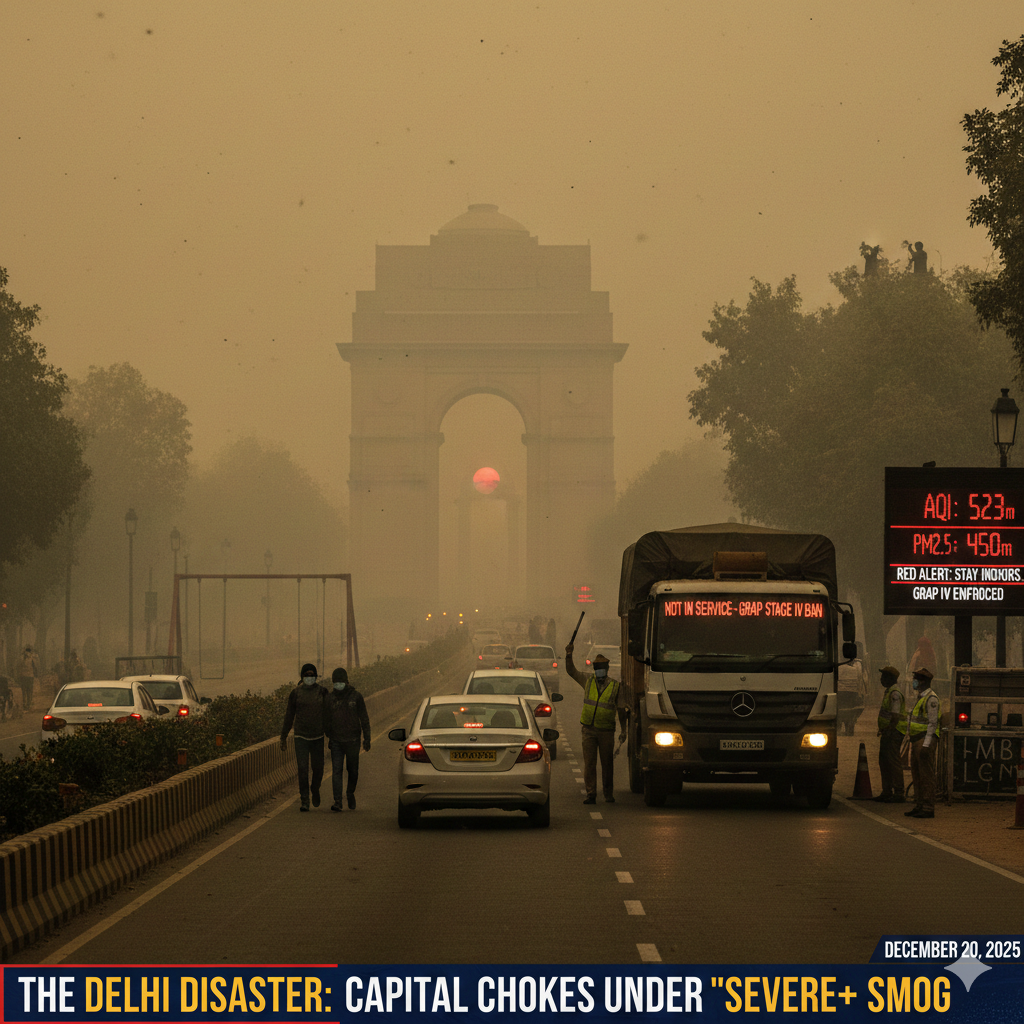
As of Saturday, December 20, 2025, Delhi is currently facing a significant “air emergency,” with the air quality index (AQI) swinging between Severe and Hazardous levels. After a very brief improvement earlier this week, a thick blanket of toxic smog has once again descended over the National Capital Region (NCR).
Current Air Quality Status
The 24-hour average AQI for Delhi is currently hovering around 523, according to real-time monitoring data. In several hotspots, the situation is even more critical:Anand Vihar: AQI has spiked as high as 672.Jahangirpuri & Mundka: Consistently recording levels above 500.Visibility: Dense fog and smog have reduced visibility to less than 50 meters in some areas during early morning hours, leading to flight and train delays.
Key Drivers of the Crisis
- Meteorological “Trap”: A combination of low temperatures (dipping to 7.5°C) and calm surface winds has created a “temperature inversion.” This effectively acts as a lid, trapping pollutants like PM2.5 and PM10 near the ground.
- Transport Emissions: Recent data indicates that the transport sector remains a primary local contributor, accounting for approximately 16.3% of the daily pollution load.
- Regional Factors: While the peak stubble-burning season has passed, industrial emissions from the surrounding NCR and local dust continue to keep the baseline pollution dangerously high.
Emergency Measures & Restrictions
Authorities have reactivated various stages of the Graded Response Action Plan (GRAP) to combat the deteriorating air:
• GRAP Stage IV (Severe+): Currently enforced in several sectors, which includes a ban on non-essential truck entry into Delhi and a halt on all construction and demolition activities.
• Work from Home: Several private and government offices have been advised to shift to 50% capacity or implement work-from-home protocols.
• School Closures: Primary schools in many districts have moved to online classes to protect children from the “gas chamber” conditions.
Health Advisory
Medical experts are warning of a sharp rise in respiratory and cardiovascular issues. Residents are urged to:
- Avoid outdoor exercise during early morning and late evening.
- Wear N95 masks if stepping outside is unavoidable.
- Use air purifiers indoors, especially for households with children, the elderly, or those with pre-existing conditions like asthma.