
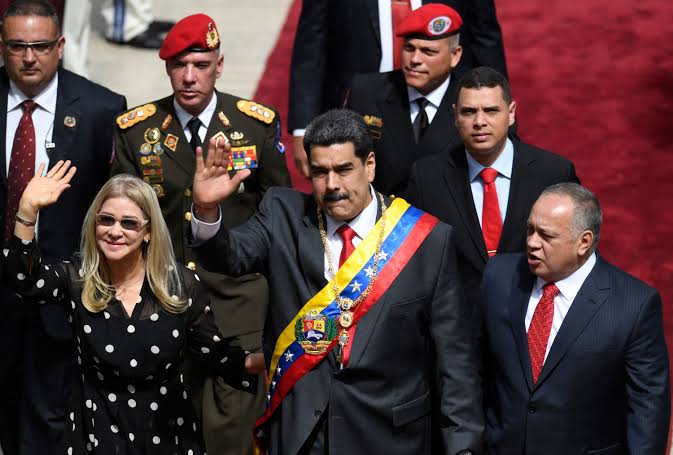
In a dramatic and unprecedented international development, former Venezuelan President Nicolás Maduro was captured by U.S. military forces during a surprise operation in Caracas and brought to the United States, where he made his first court appearance in New York this week.
The military action, executed in the early hours of January 3, 2026 as part of a mission dubbed Operation Absolute Resolve, involved U.S. special operations troops and support from American airpower. Maduro and his wife, Cilia Flores, were seized from a residence in Venezuela’s capital and swiftly transported out of the country to face justice in the United States.
Upon arrival, both were taken into custody at a federal detention facility in Brooklyn, New York. On January 5, the couple appeared before a federal judge in Manhattan, where they were formally arraigned on a sweeping set of drug trafficking and narco-terrorism charges.
In court, Maduro pleaded not guilty, asserting he was “innocent” and describing his removal from Venezuela as a “kidnapping.” He also maintained that he is still the constitutional president of Venezuela, even as U.S. authorities reject that claim. Flores, who also faces related charges, similarly entered a not-guilty plea.
The charges stem from a long-standing indictment alleging Maduro’s involvement in conspiring to import large quantities of cocaine into the U.S. and other criminal activities tied to his government. These offenses carry possible decades-long or even life sentences if convictions are secured.
The initial hearing was brief, with a follow-up court date scheduled for March 17, where further legal arguments — including challenges to the legality of his capture and claims of diplomatic immunity — are expected.
The operation has sparked global controversy, drawing criticism from Venezuela’s government, which denounced the U.S. action as a violation of sovereignty, while Washington defends it as a legitimate law-enforcement effort against transnational crime. International responses continue to pour in, with debates over both the legal and diplomatic implications of removing a sitting head of state by force.