
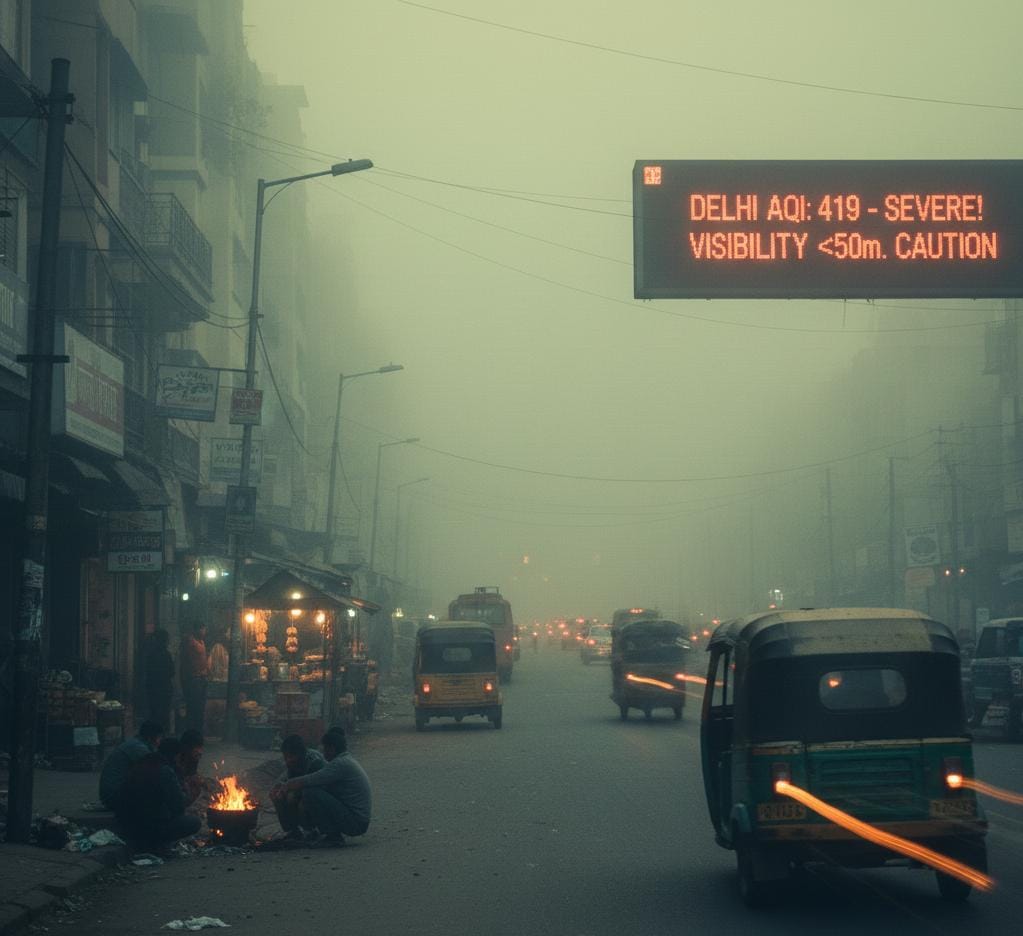
NEW DELHI – A lethal combination of a “severe” cold wave and a dense, toxic smog has brought North India to its knees this Monday, December 29, 2025. With visibility dropping to near-zero in several cities and air quality plunging into the “hazardous” zone, the region is facing one of its most challenging winter spells in recent years.
The “Zero Visibility” Crisis
From the early hours of Monday, a thick blanket of fog enveloped the National Capital Region (NCR), Punjab, Haryana, and Rajasthan. The India Meteorological Department (IMD) issued an Orange Alert, noting that visibility at major airports and highways plummeted to below 50 meters.
The impact on transportation has been catastrophic:
- Aviation: Over 128 flights were cancelled at Delhi’s Indira Gandhi International (IGI) Airport, with another 200 delayed. Major carriers like IndiGo and Air India have issued urgent travel advisories as operations shifted to emergency CAT-III landing procedures.
- Railways: The Indian Railways reported that more than 100 trains—including premium expresses like the Rajdhani and Shatabdi—are running behind schedule by 3 to 10 hours.
- Roads: Massive traffic snarls were reported on the Yamuna Expressway and the Eastern Peripheral Expressway, where “near-zero” visibility led to several minor pile-ups and forced commuters to move at a crawl.
Toxic Air: AQI Crosses 450
Compounding the cold is a severe dip in air quality. On Monday morning, Delhi’s overall Air Quality Index (AQI) surged past 419, with specific hotspots like Anand Vihar and Vivek Vihar recording a staggering 459.
The “Severe” category rating has prompted local authorities in Noida and parts of Haryana to shut schools for younger children. Health experts have warned that the combination of cold air and high PM2.5 levels creates a “death trap” for those with respiratory conditions, urging citizens to stay indoors and use N95 masks if they must step out.
Freezing Temperatures
The mercury has taken a sharp dive across the plains. Hisar (Haryana) recorded the region’s lowest temperature at 2.5°C, while Delhi shivered at a minimum of 7°C.
“The cold day conditions are expected to persist for the next 48 hours,” said an IMD official. “While a slight reprieve is expected around New Year’s Eve due to a western disturbance, a more intense cold wave is likely to follow in the first week of January.”
Government ResponseState governments have ramped up efforts to support the homeless, opening additional “Rain Baseras” (night shelters) and distributing blankets. The Commission for Air Quality Management (CAQM) is expected to meet later today to discuss implementing the most stringent stage of the Graded Response Action Plan (GRAP IV), which could include a ban on non-essential construction and truck entry into the capital.