
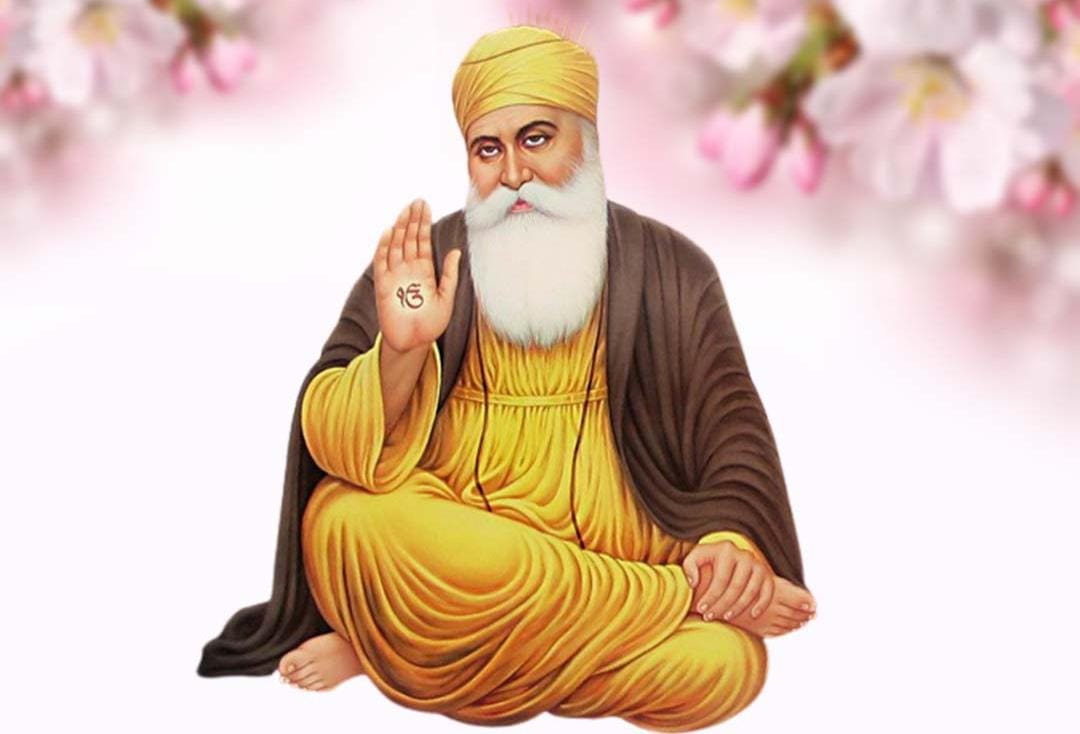
Guru Nanak Jayanti, also known as Gurpurab or Prakash Utsav, marks the birth anniversary of Guru Nanak Dev Ji (1469–1539), the founder of Sikhism and the first of the ten Sikh Gurus. It is one of the most sacred festivals, celebrated globally with deep devotion, unity, and adherence to the Guru’s core teachings: Ek Onkar (There is one God), equality, selfless service, and truthful living.
When Is It Celebrated?
Unlike a fixed Gregorian date, Gurpurab is celebrated on Kartik Purnima, the full moon day of the Hindu lunar month of Kartik, which typically falls in October or November.
The Celebrations: A Spiritual Journey
The festivities are far from a one-day event; they are a continuous process steeped in spiritual practice and community service.
1. Akhand Path (Two Days Before)
The preparations begin with an Akhand Path, a continuous, non-stop recitation of the entire Guru Granth Sahib (the holy scripture of Sikhs) over 48 hours in the Gurdwara. This collective reading sets a solemn and spiritual tone for the entire occasion.
2. Nagar Kirtan (On the Eve)
On the day before Gurpurab, colorful and vibrant religious processions, called Nagar Kirtans, are taken out on the streets.
- Led by: The procession is led by the Panj Pyare (The Five Beloved Ones), carrying the Guru Granth Sahib on a beautifully decorated palanquin (palki).
- Atmosphere: Devotees sing hymns (Kirtan), share the Guru’s message (Katha), and showcase traditional Sikh martial arts, Gatka. The streets are decorated, reflecting the community’s joy and reverence.
3. The Main Day: Gurpurab (The Full Moon Day)
The main day is dedicated to prayer, reflection, and community service.
- Early Morning: Celebrations start before dawn with Prabhat Pheris (early morning devotional processions) and the singing of Asa di Var (morning hymns) in the Gurdwara.
- Kirtan & Katha: Special congregations are held throughout the day, featuring hymns from the holy scripture and discourses on the life and teachings of Guru Nanak Dev Ji.
- Langar: The practice of Langar (free, community kitchen) is central to Gurpurab, embodying the Guru’s message of equality and selfless service (Seva). Thousands gather to cook, serve, and eat together, regardless of their background, caste, or faith.
🇮🇳 Punjab: The Heart of the Festivities
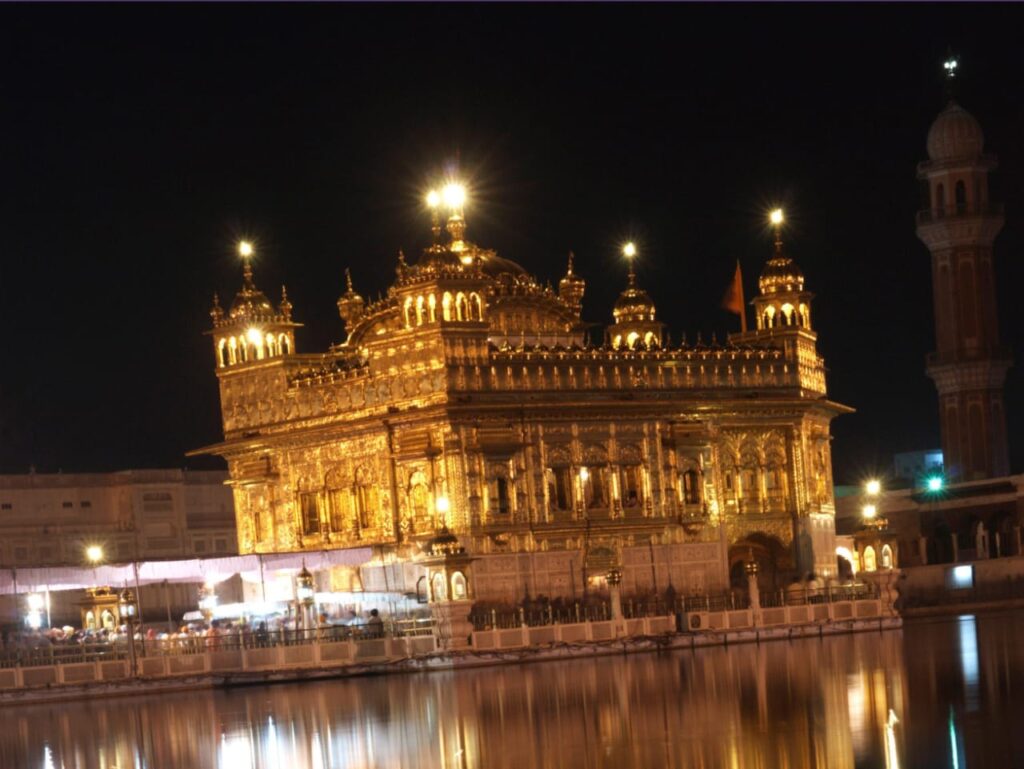
As the spiritual home of Sikhism, Punjab celebrates Gurpurab with unparalleled zeal and grandeur.
- Amritsar: The Golden Temple (Harmandir Sahib) is spectacularly illuminated with thousands of lights and adorned with flowers. Continuous Kirtan attracts devotees from all corners of the globe.
- Sultanpur Lodhi: Given that Guru Nanak Dev Ji spent a significant part of his life here, this town sees exceptionally massive gatherings and grand celebrations.
- Community Spirit: Every city, town, and village in Punjab comes alive. Gurdwaras are decked out, and the air is filled with devotion and the sharing of food and joy. It is a major public holiday, allowing families to come together for spiritual reflection.
🌎 Global Celebrations: A Worldwide Legacy
Guru Nanak Dev Ji’s message is universal, and his Gurpurab is celebrated wherever the Sikh diaspora has settled—from Canada and the UK to the US and Australia.
- Gurdwaras as Hubs: Gurdwaras become the central point of the celebrations, hosting the Akhand Path, Kirtan, and Langar, ensuring that the next generation remains connected to their heritage.
- Interfaith Dialogue: Celebrations often include events that welcome people of all faiths, promoting Guru Nanak’s core tenet of universal brotherhood and the oneness of humanity.
- Nankana Sahib, Pakistan: Devotees also undertake a pilgrimage (Jatha) to Nankana Sahib in Pakistan, the birthplace of Guru Nanak Dev Ji, to celebrate Gurpurab at the historic site.
In essence, Gurpurab is more than a birthday celebration; it is a powerful reminder to uphold Guru Nanak Dev Ji’s teachings of “Kirat Karo, Naam Japo, Vand Chakho” (Work honestly, remember God, and share your earnings). It’s a day for the world to reflect on the values of humanity, equality, and compassion.
🍽️ Langar: More Than Just a Free Meal
Langar is arguably the most recognizable and profound manifestation of Guru Nanak Dev Ji’s teachings. It is the communal kitchen and meal served in every Gurdwara.
The History of Langar
- Founded by Guru Nanak Dev Ji: The tradition began with Guru Nanak Dev Ji himself. Legend has it that his father gave him money to start a business (a “true bargain”). Instead, Guru Nanak used the money to feed a group of hungry ascetics, declaring that feeding the needy was the “truest bargain” of all. This act formalized the concept of Langar.
- Institutionalized by Guru Angad Dev Ji: The second Guru, Guru Angad Dev Ji, institutionalized and expanded the practice, making it a regular feature of Sikh community life.
- An End to Caste: Historically, different castes would not eat together. By making everyone sit side-by-side (Pangat) and eat the same simple, vegetarian food, the Gurus deliberately broke the shackles of the caste system, establishing equality as a fundamental tenet of the faith.
The Spiritual Significance
| Principle | Meaning |
| Equality (Pangat) | Everyone sits on the floor together, symbolizing that all humans are equal, regardless of social status, wealth, or religion. |
| Selfless Service (Seva) | The food is prepared, served, and cleaned up by volunteers (Sevadars). No one is paid. This embodies the principle of Seva—service without expectation of reward. |
| Humility | Serving others and eating simple food while seated on the ground fosters humility among all participants. |
Langar is the ultimate reality check: rich or poor, prime minister or pauper, you’re all eating the same humble dal and roti off the same floor.
⚔️ Gatka: The Art of Divine Protection
Gatka is the ancient and electrifying martial art traditionally performed by Sikhs, and it is a popular highlight of the Nagar Kirtan procession.
What is Gatka?
Gatka is a complete fighting system that uses spiritual teachings as its foundation. It emphasizes a mix of offensive and defensive movements, often involving various weapons.
- Historical Context: The Gurus adopted and refined martial skills to defend the faith against oppressive rulers, transforming Sikhs from a purely spiritual community into Sant-Sipahis (Saint-Soldiers).
- The Display: During Gurpurab processions, performers, often in vibrant attire, demonstrate incredible feats of skill with:
- Sticks (Soti): Simulating swords and training the body for speed and precision.
- Swords (Kirpan): Performing complex defensive and attacking routines.
- Shields (Dhals): Used for protection against blows.
The Spiritual Significance
- Self-Defense: It is not about aggression, but about the right to self-defense and protecting the weak and oppressed (Dharma Yudh).
- Discipline: The practice requires immense mental and physical discipline, reflecting the spiritual discipline required to follow the Guru’s path.
So, while Langar feeds the body and soul with humility, Gatka showcases the strength and readiness to defend the righteous path—two sides of the same Gurpurab coin!