
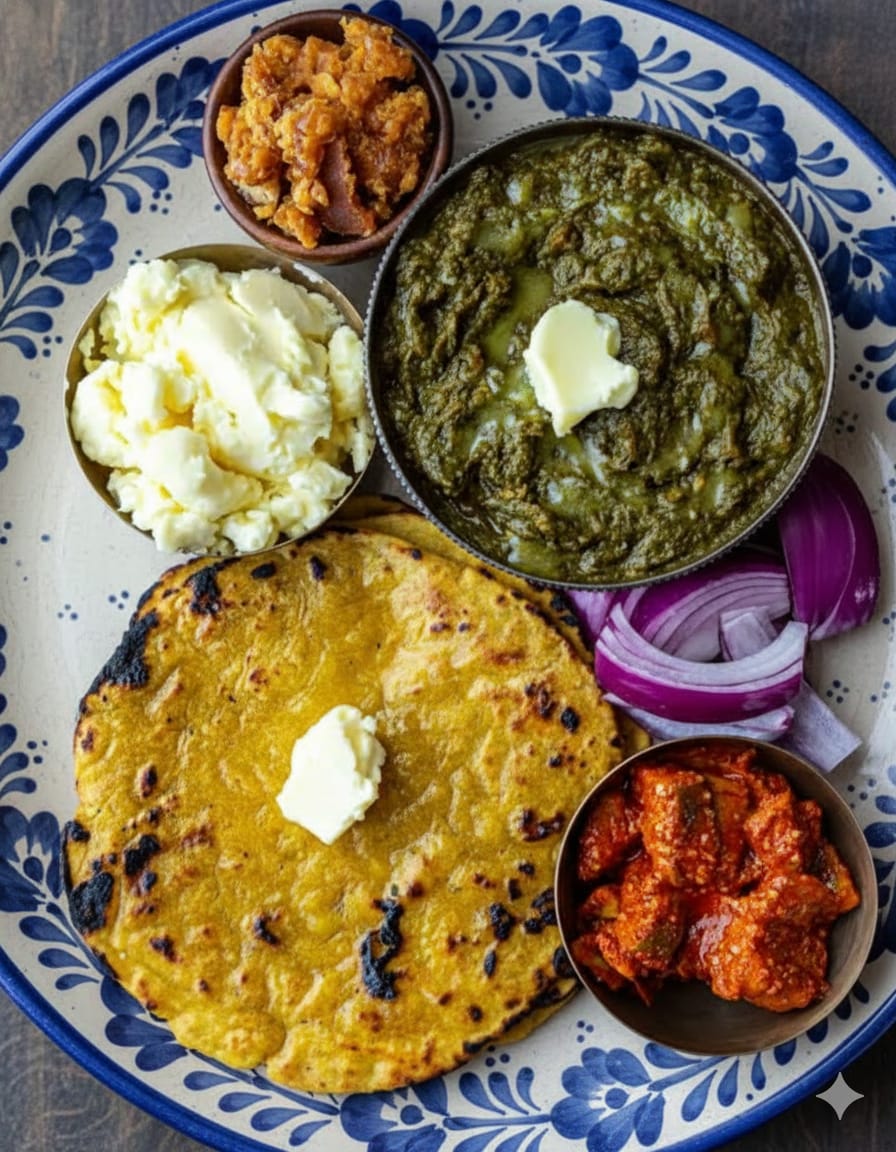
“Saag” (ਸਾਗ / ساگ), the leafy green vegetable dish commonly eaten in Punjab and other parts of India, is not only delicious but also packed with health benefits. Here’s a detailed breakdown:
Nutritional Benefits
- Rich in Vitamins:
Contains high levels of Vitamin A, Vitamin C, and Vitamin K, which support immunity, skin health, and blood clotting.
Folate (Vitamin B9) helps in DNA synthesis and is essential during pregnancy.
- Mineral Powerhouse:
High in iron, calcium, and magnesium – great for bone health and preventing anemia.
Potassium in saag helps maintain healthy blood pressure.
- Dietary Fiber:
Promotes healthy digestion and prevents constipation.
Can help in controlling cholesterol levels and blood sugar.
- Antioxidants:
Contains compounds like beta-carotene, lutein, and zeaxanthin that fight free radicals.
Supports eye health and reduces the risk of chronic diseases.
- Low in Calories:
Makes it ideal for weight management while providing essential nutrients.
Health Benefits
- Supports Heart Health:
The fiber, potassium, and antioxidants reduce risk factors for heart disease. - Boosts Immunity:
Vitamins and antioxidants help fight infections. - Strengthens Bones:
Calcium, magnesium, and vitamin K in saag improve bone density. - Improves Digestion:
High fiber content keeps the digestive system regular. - Anti-inflammatory:
Leafy greens in saag have compounds that reduce inflammation in the body.
Popular Types of Saag
Sarson da Saag (Mustard leaves): High in iron and calcium.
Palak Saag (Spinach): Great for iron and vitamin C.
Bathua Saag (Chenopodium): Supports digestion and is detoxifying.
Methi Saag (Fenugreek leaves): Helps control blood sugar and cholesterol.
Tip: Cooking saag with minimal oil and using spices like garlic, ginger, and turmeric enhances both flavor and health benefits.