
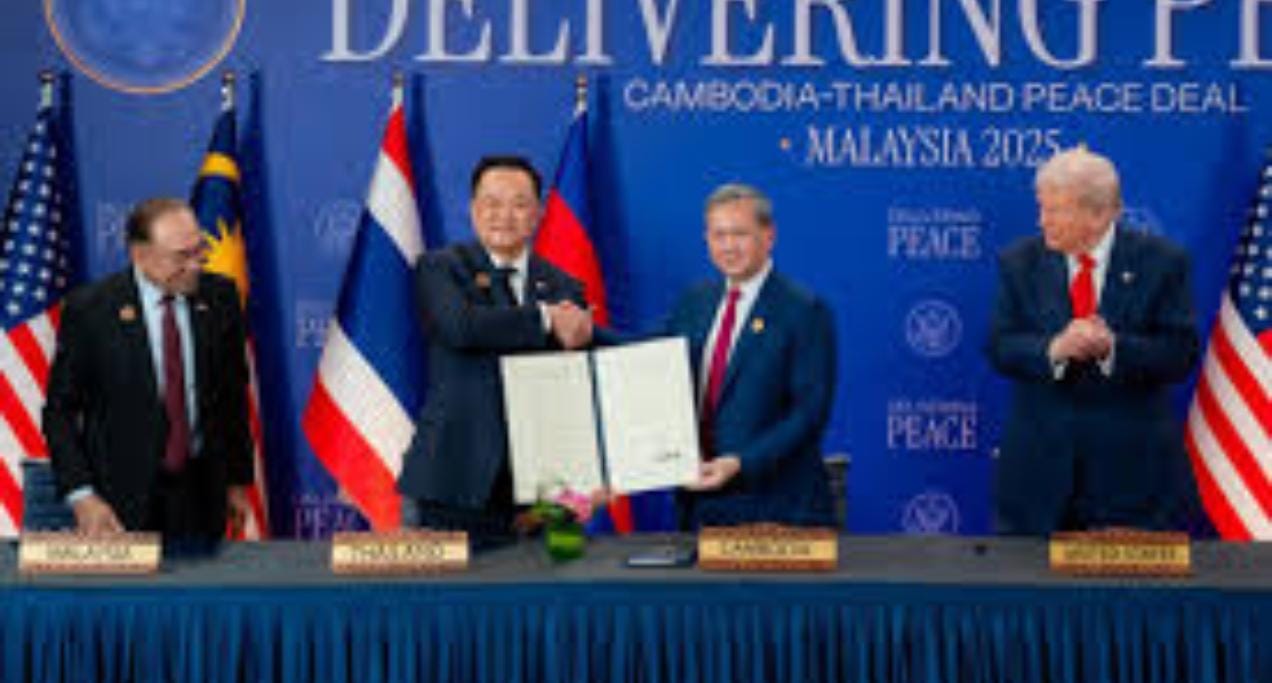
On 26 October 2025, the prime ministers of Thailand and Cambodia formally signed a joint declaration — known as the “Kuala Lumpur Peace Accord” — on the sidelines of the Association of Southeast Asian Nations (ASEAN) Summit in Kuala Lumpur.
The ceremony was witnessed by U.S. President Donald Trump, Malaysian Prime Minister Anwar Ibrahim and the two parties’ leaders: Cambodian Prime Minister Hun Manet and Thai Prime Minister Anutin Charnvirakul.
Why it matters
The accord builds upon earlier cease-fire efforts after border clashes between Thailand and Cambodia in July 2025, which caused dozens of casualties and the displacement of many civilians.
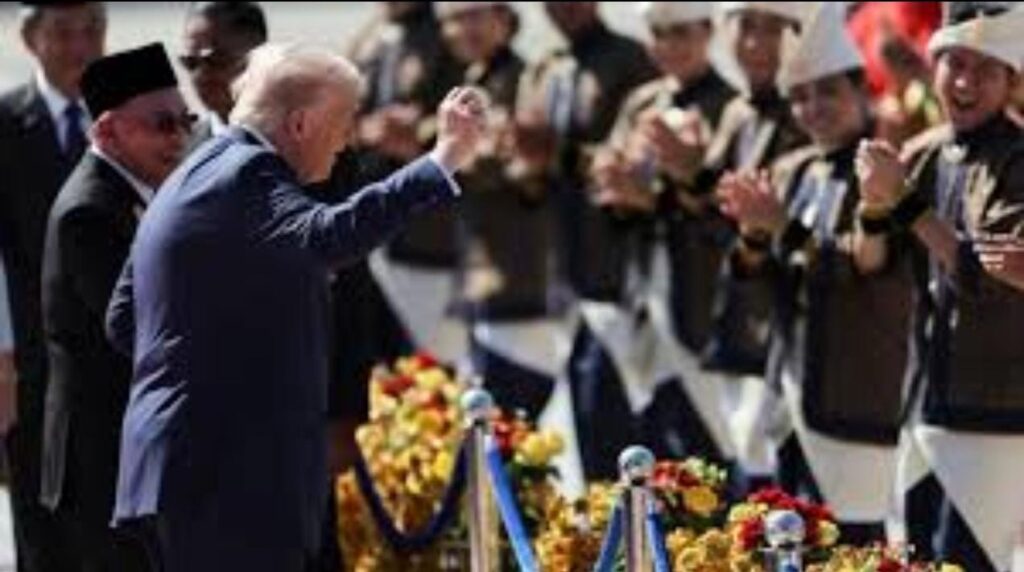
Trump’s role in pushing both countries to negotiate — including threats of trade penalties and leverage in U.S. tariff discussions — is highlighted as a significant factor in reaching the agreement.
The deal signals a major diplomatic milestone for Southeast Asia. By having a formal witnessed agreement, the two countries aim to shift from conflict-prone border tension to peaceful resolution mechanisms.
Key provisions of the accord
According to statements from the involved parties, the declaration includes:
A withdrawal of heavy weapons and reduction of military presence in contested border zones.
Release of prisoners captured during earlier skirmishes – Thailand has agreed to release Cambodian detainees.
Establishment of a joint border-commission or observer team to monitor compliance and assist in de-escalation.
Restoration of civilian access to affected villages, and future cooperation on border demarcation and economic/trade linkages.
Context & background
The border between Thailand and Cambodia has long been disputed, especially in regions around ancient temples such as Preah Vihear Temple, and has seen recurrent clashes in past years (notably 2008, 2011, 2018).
In July 2025, a five-day military confrontation erupted between the two countries, leading to dozens of fatalities and hundreds of thousands of displaced civilians.
The mediation role of Malaysia (Anwar Ibrahim) and the diplomatic/ economic pressure from the U.S. under Trump’s administration helped set the stage for today’s formal deal.
What comes next
Implementation: The biggest test will be how faithfully both nations implement the withdrawal of weapons, demilitarisation of border zones and actual cessation of hostilities.
Monitoring: The joint/ASEAN observer body will be crucial for verification and confidence building.
Economic rebound: With peace affirmed, opportunities open for trade, cross-border infrastructure and tourism cooperation between Thailand and Cambodia.
Sustainability: Ensuring political will persists and nationalist pressures do not derail the agreement will be key for lasting peace.
Quotes from the event
“This is a momentous day for all of the people of Southeast Asia as we sign a historic agreement to end the military conflict between Cambodia and Thailand.” — Donald Trump
“We did something that a lot of people said couldn’t be done.” — Donald Trump
“It lays the foundation for lasting peace and prosperity.” — Thai PM Anutin Charnvirakul
Caveats & challenges
Despite signing, previous cease-fires have proved fragile with sporadic accusations of violations (e.g., landmine incidents).
While Trump’s involvement is central to the narrative, some analysts caution that regional actors (Malaysia, ASEAN) and on-the-ground mechanisms will actually determine success.
Nationalist sentiment, border demarcation complexity and historical grievances will remain underlying hurdles for full reconciliation.