
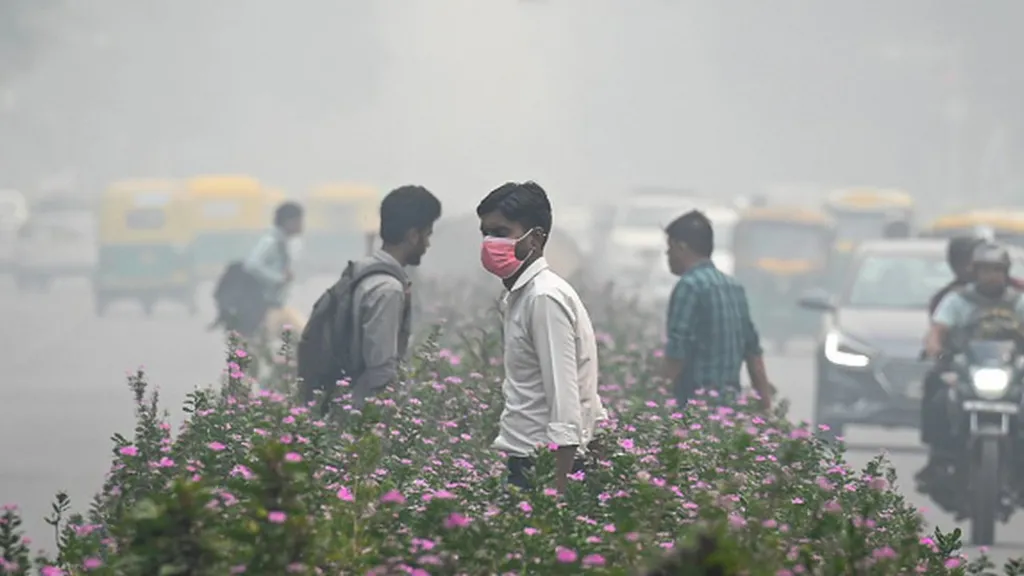
Following Diwali celebrations across India, air quality levels plummeted to hazardous levels in several northern and western cities. However, as per the latest Air Quality Index (AQI) data, the situation has shown significant improvement by midday.
Pollution Peaks Overnight
At 1:30 a.m. on October 21, Lucknow topped the list with a staggering AQI of 1317, falling in the “Severe +” category — the highest recorded among all major Indian cities.
New Delhi followed closely at 991, while Jodhpur (855), Delhi (821), and Noida (777) rounded off the top five.
Other cities such as Ahmedabad (640), Chandigarh (565), Ghaziabad (556), Konnagar (545), and Sodepur (531) also recorded “hazardous” air quality levels, largely due to post-Diwali firecrackers and stagnant winter air.
Morning Relief: Still Alarming
By 6:30 a.m., the pollution levels had slightly receded but remained “very unhealthy.”
New Delhi continued to lead with an AQI of 706, followed by Delhi (680) and Noida (431).
Gurugram (398), Haldia (332), and Ahmedabad (309) also featured among the top polluted cities.
The early morning readings reflect the combined impact of overnight emissions, low wind speed, and temperature inversion that traps pollutants near the ground.
Air Quality Improves by Noon
By 12:30 p.m., winds and sunlight began dispersing pollutants, bringing visible relief across regions.
Delhi recorded an AQI of 278, classified as “Very Unhealthy” but far below its morning level.
New Delhi (266), Meerut (231), Gurugram (219), and Jaipur (210) followed.
Ghaziabad (203), Rishra (196), Barrackpore (192), Moradabad (192), and Noida (190) completed the top 10 list for the afternoon.
Trend: Gradual Recovery, But Long Way to Go
Experts say that while the AQI improvement by afternoon is encouraging, it remains far from safe. Most cities still fall in the “poor to very unhealthy” bracket, well above the acceptable limit of 100.
Environmental specialists attribute the short-term spike to firecracker emissions, vehicular pollution, and low wind velocity, which trap fine particulate matter (PM 2.5 and PM 10) near the surface.
They warn that repeated post-festival spikes highlight the need for stronger air-quality management and citizen awareness campaigns.
Key Takeaways
Lucknow witnessed the highest AQI in the nation at 1317, followed by New Delhi (991).
By afternoon, Delhi’s AQI improved to 278, yet remained well above safe limits.
Northern India continues to face severe air-quality challenges during the post-Diwali period.
Authorities urge residents to minimize outdoor exposure, especially among children and the elderly.
Conclusion
The pattern reflects a familiar post-festival struggle: a sharp pollution surge followed by gradual recovery. While weather conditions helped improve the air slightly, the data underscores that long-term solutions — cleaner energy, stricter emission norms, and public cooperation — remain vital to India’s fight against air pollution.